Editor’s Note: Overdraft Apps provides detailed product reviews and recommendations based upon extensive research and our own hands-on testing. We may earn a referral fee when you sign up for or purchase products mentioned in this article.

Mitchel holds a Bachelors of Business Administration in Finance from The Goizeta School of Business at Emory University and a Masters of Business Administration from The Haas School of Business at The University of California.
- Uprova Review: Tribal Loan Costs, Real APRs, and When to Avoid It - July 19, 2026
- Tribal Loans for Bad Credit: What They Actually Cost - July 15, 2026
- Upstart Cash Line Review: $200 Minimum Limit Guaranteed - June 25, 2026
✅ Updated July 2026 — fees & terms verified against official sources
30-SECOND SUMMARY: No bank or banking app will let you overdraft a truly brand-new account with zero history — that’s simply not how risk underwriting works, no matter what a headline promises. But a handful of banking apps get you the closest realistic thing: fee-free overdraft coverage (or a cash advance against your paycheck) within days of opening an account and receiving your first qualifying deposit, instead of the 30–90 day wait most traditional banks impose. Chime and Current are the two fastest paths, and we compare both below — including the lesser-known difference between their overdraft features and their separate cash advance features.
If you’re running low on cash, overdrafts can help cover transactions when your checking account balance is, or is about to go, negative.
The problem?
Most traditional banks set rules around overdrawing your account. If you’re a new customer, overdrafts might be limited (or unavailable) for the first 30–90 days. Even for existing customers, you may face low overdraft limits.
Either way, you can end up paying sky-high overdraft fees and still not get the cash you need to cover your expenses.
The solution? A small number of banking apps — led by Chime and Current — offer fee-free overdraft coverage that kicks in within days of your first qualifying direct deposit, not months. Several of them also offer a second, separate feature: an early cash advance against wages you’ve already earned, which works differently than overdraft and is worth understanding on its own.
Fees, limits, and eligibility rules below were last verified against each provider’s official terms in July 2026.
Jump to:
Need cash today instead of waiting on overdraft eligibility? >>> Compare Loans in Minutes at PockBox 👈
Compare Chime, Current & 3 More Overdraft-Friendly Banking Apps (2026)
| App | Overdraft / Advance Feature | Rating | Monthly Fee | Best For | Get Started |
|---|---|---|---|---|---|
 Chime Chime |
SpotMe overdraft up to $200; MyPay cash advance up to $500 | ★ 4.8 | $0 | Fastest overdraft eligibility, $100 new-member bonus | Get $100 & Sign Up |
 Current Current |
Fee-Free Overdraft up to $200; Paycheck Advance up to $750 | ★ 4.8 | $0 | Highest advance limit, cash-back debit card | Check Out Current |
 Dave Dave |
ExtraCash advance up to $500 | ★ 4.8 | $5/mo | No direct deposit required to qualify | Check Out Dave |
 Albert Albert |
Albert Instant advance, $25–$1,000 | ★ 4.6 | $0 | No subscription required for Instant Advance | Check Out Albert |
| Go2Bank | Overdraft protection up to $200 | — | $0 with direct deposit ($5 without) | No ChexSystems check, second-chance banking | Learn More |
Overdraft and advance limits depend on your deposit history and are set at each provider’s discretion — few users qualify for the maximum right away.
Why don’t most banks let you overdraft right away?
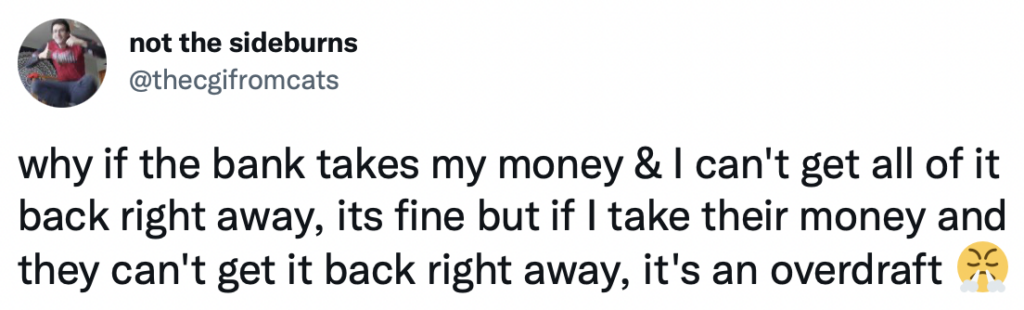
Short answer: banks want to see a deposit history before extending overdraft privileges, because an overdraft is really a small, short-term loan. In news that will surprise no one, banks aren’t a charity.
When your account balance goes negative, you aren’t spending your money — you’re spending the bank’s money. Whether you’re paying a bill or withdrawing cash at the ATM, an overdraft is really a small, short-term loan.
Does that make $35+ overdraft fees fair? No. But overdrafts are a wildly profitable line of business for banks – they’ve historically made over $15 billion a year off of them.
If a customer doesn’t repay an overdraft, the bank loses money and often incurs collection costs. So banks don’t love extending overdraft privileges to customers they don’t know well yet – most want to see a track record of deposits before paying out overdraft transactions on a new account.
Is there a legal cap on overdraft fees?
No — as of 2026, there is no federal cap on overdraft fees. The CFPB finalized a rule in December 2024 that would have capped overdraft fees at $5 (or a cost-justified alternative) for banks with more than $10 billion in assets, starting October 2025. Congress overturned that rule using the Congressional Review Act, and it was signed into law in May 2025 — so it never took effect, and the CFPB is barred from issuing a substantially similar rule without new authorization from Congress.5
Practically, that means large banks remain free to charge whatever they were charging before — typically $30–$35 per overdraft — with no dollar-amount ceiling. It’s one more reason the fee-free apps on this page (Chime’s SpotMe, Current’s Fee-Free Overdraft) are worth a look: since the fee cap never materialized, “free” overdraft coverage is doing more work than it would have if the $5 cap had gone through.
Fee caps aside, the wait-time requirement is still the bigger obstacle for most people opening a new account — and that requirement applies to many of the online-first banking apps on this page too. The difference isn’t that they skip underwriting entirely; it’s that they can approve you off a single qualifying direct deposit instead of 60–90 days of history. Here’s how a few traditional banks handle it, for context:
| Bank | Overdraft Policy |
|---|---|
| Citizens Bank | Won’t pay overdrafts on accounts open less than 60 days |
| Navy Federal | Overdrafts only available on accounts at least 90 days old |
| Regions Bank | Customers without a linked Regions credit card wait 14 days before using overdraft privileges |

Find Loans for $100 - $2,500 in Minutes
- Multiple lenders compete for your business
- No minimum credit score
- View loan offers in minutes - No application fees, no obligation
5 banking apps that get you overdraft coverage fastest
Chime and Current are the fastest options, both offering fee-free overdraft coverage within days of your first qualifying deposit — versus the 30–90 day wait at most traditional banks.
You can sidestep most of that wait with a banking app that qualifies you off a single direct deposit instead of months of history. These apps also show you exactly how much you have available to overdraft at any time, and several charge no overdraft fees at all.
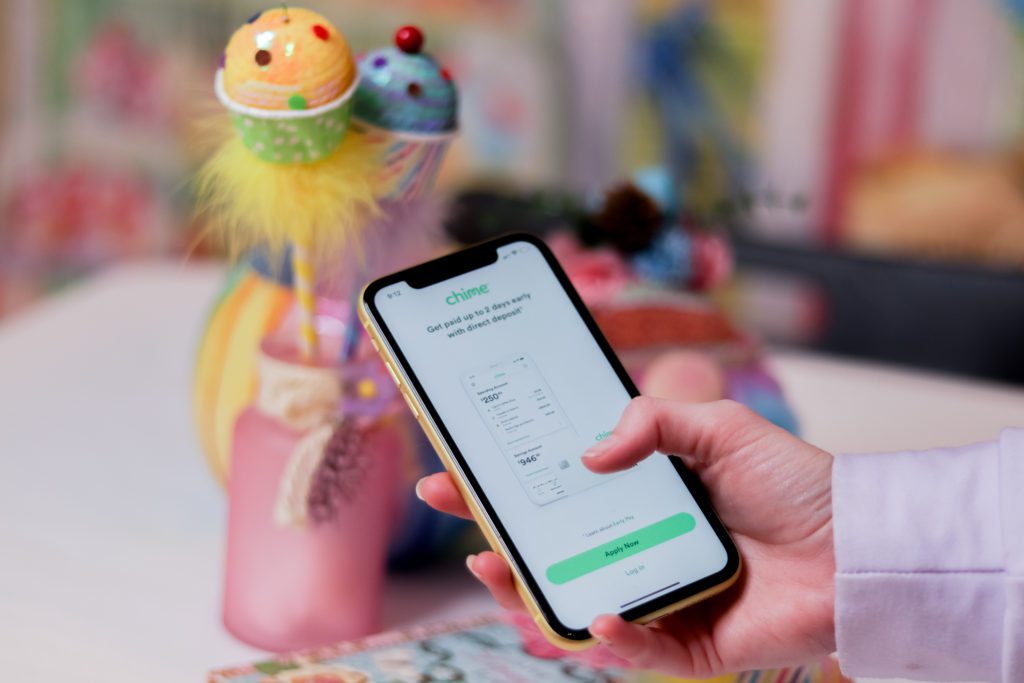
#1 – Chime: SpotMe overdraft up to $200, plus a $100 bonus for new members
Chime is the most popular banking app in America, and it’s our top pick here for two reasons: its SpotMe feature gets you fee-free overdraft coverage faster than almost anyone else, and new members who sign up through our link can currently earn a $100 bonus.1
SpotMe is Chime’s fee-free overdraft feature. Once you’re enrolled, Chime covers you if a debit card purchase, credit card purchase, or ATM withdrawal takes your balance negative — up to your SpotMe limit — with no overdraft fee, ever.
To enroll, you need to activate your Chime Visa® Debit Card (or secured Credit Builder card) and receive at least one qualifying direct deposit of $200 or more within the past 34 days. Your SpotMe limit starts at $20 and can grow to as much as $200 over time, based on your deposit consistency, account history, and spending activity.2
If you’ve got friends who use Chime, you can also send each other SpotMe Boosts to temporarily raise each other’s limits.
Separately from SpotMe, Chime also offers MyPay, a cash advance feature that lets eligible members borrow up to $500 against wages they’ve already earned — we break down exactly how MyPay differs from SpotMe (and which one you should reach for) in the comparison section below.
Other perks include a host of no-fee features and banking services:
- No annual, foreign transaction, membership, or service fees
- No minimum balance requirements
- 60,000+ fee-free ATMs
- Access your paycheck up to two days early (requires direct deposit)
- Credit building via the Chime Credit Builder Secured Visa Card
Example: your account balance is $50, but dinner costs $65. With SpotMe enrolled, Chime covers the $15 overdraft with your debit card — no fee. Once your next deposit lands, the negative balance clears automatically and your full limit is available again.
Open a Chime account & get a $100 bonus >>> Sign up for Chime in less than 2 minutes 👈
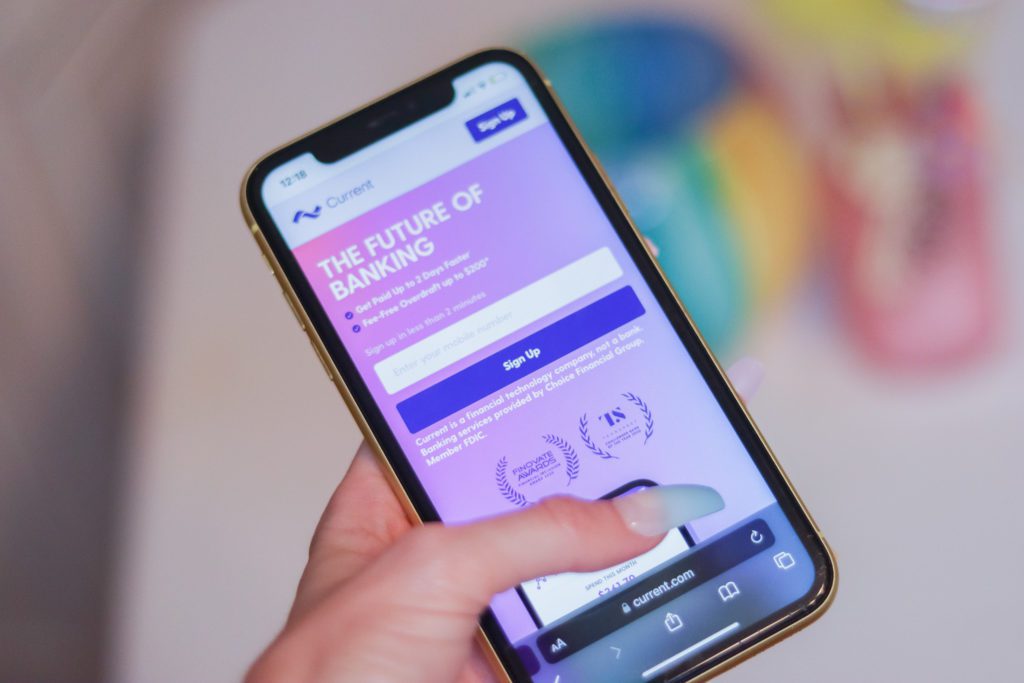
#2 – Current: Fee-Free Overdraft up to $200, plus Paycheck Advance up to $750
Current offers nearly all the features of a bank on your phone, with no minimum balance requirements and no monthly fees.
Current’s standout feature here is Fee-Free Overdraft (the feature many people still know by its older name, Overdrive). Once enrolled, Current covers qualifying debit and Build card purchases even when your checking account is empty — with no overdraft fee, ever.
To qualify, you need to receive at least $200 in eligible payroll deposits into your Current Account over a rolling 35-day period and keep your account in good standing. Your limit starts around $25 and can grow to $200 as your deposit history builds. Any negative balance is repaid automatically from your next qualifying deposit, and you have up to 60 days to repay before losing access to the feature.3
You could open a new Current account today, receive a qualifying paycheck deposit tomorrow, and have overdraft coverage active shortly after — no 60–90 day wait.
Separately, Current also offers Paycheck Advance, which lets eligible members access up to $750 of wages they’ve already earned before payday — a different feature from Fee-Free Overdraft, and one we compare directly below.
Other perks include a long list of no-fee features and banking services:1
- Zero ATM fees at over 40,000 in-network ATMs
- Early direct deposits (up to two days early)
- No minimum balance or bank transfer fees
- Cash back rewards with participating merchants
Current’s app pushes real-time notifications about your balance and overdraft usage, so you always know how much room you have left before hitting your limit.
Check your Fee-Free Overdraft eligibility >>> Check out Current 👈
Overdraft vs. cash advance: which should you use?
Both Chime and Current now offer two different features that can get you extra cash – and it’s easy to conflate them, since both apps market them side by side. They solve different problems, though:
- Overdraft (SpotMe / Fee-Free Overdraft) lets your balance go negative at the moment of a purchase or withdrawal. It’s designed for small, occasional shortfalls — the classic “I’m $12 short at checkout” moment — and it’s automatically repaid from whatever lands in your account next.
- Cash advance (MyPay / Paycheck Advance) puts money into your account before you spend it, against wages you’ve already earned but haven’t been paid yet. It’s designed for larger, planned expenses — rent, a car repair, a bill due before payday — and you choose when to draw it, rather than it triggering automatically at checkout.
| Overdraft (SpotMe / Fee-Free Overdraft) | Cash Advance (MyPay / Paycheck Advance) | |
|---|---|---|
| How it works | Covers a purchase that would take your balance negative, at the moment you spend | You request a set amount in advance; it’s deposited before you spend it |
| Typical amount | Up to $200 (Chime or Current) | Up to $500 (Chime MyPay) or $750 (Current Paycheck Advance) |
| Best for | Small, unplanned shortfalls at checkout or the ATM | Larger, planned expenses before payday |
| Repayment | Automatic from your next qualifying deposit | Automatic from your next payroll deposit (or repay early in-app) |
| Pros | No fee, no action required once enrolled, covers you in the moment | Larger limit, funds available before you need to spend |
| Cons | Lower limit, doesn’t help if you need cash before a purchase | You have to remember to request it; instant delivery may carry a small fee |
In practice, they work well together: keep overdraft enrolled as a safety net for surprise shortfalls, and reach for a cash advance when you know a bigger expense is coming before your next paycheck.
#3 – Dave: Advance up to $500 with no direct deposit required
If you’d rather not move your direct deposit to qualify for extra cash, it’s hard to beat Dave.
Dave’s ExtraCash is a cash advance feature (not a traditional overdraft), and it doesn’t require you to switch banks, pass a credit check, or receive direct deposit into a Dave account. Instead, Dave securely connects to your existing bank account and reviews your history and activity to determine how much you’re eligible for.
Dave offers the highest limits to members with regular, recurring deposits, but you can still qualify without one. Most new users don’t get $500 right away — the average approved amount is closer to $73 — but your limit can grow as you build a repayment history.
Funds land instantly and for free in a Dave Spending Account (a virtual debit card usable with Apple Pay or Google Pay), or within a few business days for free via ACH to an external bank. Dave charges a $5/month membership plus a mandatory service fee of 5% of your advance amount — so a $100 advance costs $5 upfront (5%) plus the $5 monthly fee.
Get a cash advance for up to $500 >>> Check out Dave 👈
#4 – Albert: Instant advances from $25 to $1,000, no subscription required
The Albert app is a simple way to bank, save, and invest, and its Albert Instant feature can get you a cash advance the same way Dave does.
With Albert Instant, eligible members can access $25 to $1,000 — though few qualify for the maximum right away, and typical approved amounts are much lower. There’s no credit check, no interest, and no Albert subscription required to use Instant Advance; it’s available at Albert’s discretion based on your linked account activity. Transfer fees may apply depending on delivery speed.4
An optional Albert Genius subscription unlocks access to human financial experts for budgeting, credit, and debt-payoff advice — but it’s a separate add-on, not a requirement to use Albert Instant.
Instant cash advances from $25–$1,000, no subscription required >>> Check Out Albert 👈
#5 – Go2Bank: Overdraft protection up to $200
Go2Bank is worth a look if unpaid overdrafts have gotten you in trouble with traditional banks — there’s no credit check or ChexSystems review to open an account.
Go2Bank’s overdraft protection is opt-in and tied to your direct deposit history, scaling up in tiers as your deposits build: $10 after your first direct deposit, $100 once you’ve made two deposits totaling $200+ over 35 days, and up to $200 once you’ve made two deposits totaling $400+.
There’s a $15 fee per overdraft transaction, waived if you bring your balance back to positive within 24 hours, and no fee at all for overdrafts under $5 or balances more than $10 negative. It’s free to open an account, and the $5 monthly fee is waived if you receive qualifying direct deposits.
See full overdraft tiers & terms >>> Learn more about Go2Bank 👈
Quick tips to improve your overdraft chances
- Shop around: Overdrafting on a semi-regular basis? Look for a bank account that fits your spending habits. Several major banks, such as Capital One 360 and Citibank, have eliminated overdraft fees entirely, which could save you hundreds of dollars a year.
- Understand your bank’s overdraft coverage options: Most banks have several levels of overdraft coverage. At many banks, you’ll need to opt in to full overdraft coverage to overdraft at an ATM or on debit card purchases, and these typically incur fees.
- Enroll in overdraft protection: Many banks let you link a savings account or credit card to your checking account. If a transaction would push your balance below $0, funds transfer automatically to cover the difference. Most banks don’t charge to enroll, but some charge per transfer – Fifth Third charges $12 per transfer, which still beats a $37 overdraft fee.
- Set up direct deposit: Direct deposit isn’t always a hard requirement for overdraft privileges, but every provider on this page views it favorably — it’s the single fastest way to build the deposit history that unlocks overdraft or cash advance eligibility.
- Talk to customer service: Don’t be afraid to ask your bank directly about your overdraft eligibility and what steps would speed it up.
If you can’t afford to wait weeks or months for a traditional bank to activate overdraft privileges, your best bet is a banking app built to qualify you faster – like Chime or Current above.
See What You Qualify For - Compare Loan Offers in Minutes
We've partnered with Fiona to provide instant comparison quotes from leading personal loan providers, including LendingClub, PenFed, Prosper, SoFi, Upgrade, Upstart, and more!
See what you qualify for in just minutes, with no obligation and no impact to your credit score.
Frequently Asked Questions
Can I overdraft a bank account the same day I open it?
Realistically, no – not with a brand-new account and zero deposit history, at any bank or banking app. What you can do same-day (or within a day or two) is open an account with Chime or Current, receive one qualifying direct deposit, and become eligible for overdraft coverage almost immediately afterward — that’s the fastest path that actually exists, versus the 30–90 day wait at most traditional banks.
Which banks or apps let you overdraft without direct deposit?
Chime’s SpotMe and Current’s Fee-Free Overdraft both require a qualifying direct deposit into their account to enroll – that’s non-negotiable for a true overdraft feature. If you don’t want to move your direct deposit, Dave and Albert are better fits: both offer a cash advance (not a technical overdraft) of up to $500 and $1,000 respectively, based on your existing linked bank account’s activity, with no requirement to redirect your paycheck.
What’s the difference between an overdraft and a cash advance app?
Overdraft lets your balance go negative at the moment you spend, and is automatically repaid from your next deposit – it’s a safety net for small, unplanned shortfalls. A cash advance (like Dave’s ExtraCash, Albert Instant, Chime MyPay, or Current’s Paycheck Advance) deposits money into your account before you spend it, against wages you’ve already earned, and works better for larger, planned expenses. See our full breakdown above.
Is Chime SpotMe or Current’s Fee-Free Overdraft better?
Both are fee-free and both cap out at $200, so the better choice usually comes down to which app’s other features you want. Chime currently offers new members a $100 sign-up bonus and has a larger user base (helpful for SpotMe Boosts from friends); Current offers a higher-limit cash advance ($750 via Paycheck Advance vs. $500 via MyPay) if you also want that feature. You can hold both accounts and use whichever qualifies you faster.
Do these overdraft apps run a credit check?
No. Chime, Current, Dave, Albert, and Go2Bank all determine eligibility from your account activity and deposit history, not a credit check, and none of them will affect your credit score by using their overdraft or advance features.
Can I overdraft at an ATM?
It depends on the provider and whether you’ve opted in to ATM overdraft coverage. Chime’s SpotMe covers ATM withdrawals once enrolled (though out-of-network ATM fees may still apply), and Current’s Fee-Free Overdraft covers debit and Build card transactions. Traditional banks typically require you to opt in separately to “overdraft protection” for ATM and one-time debit transactions – without opting in, an ATM withdrawal that would overdraw your account is simply declined.
How do I increase my SpotMe or Fee-Free Overdraft limit?
Both limits grow the same way: consistent qualifying direct deposits over time. Chime says SpotMe limits can rise based on how long you’ve had qualifying deposits, how much you deposit, and your account activity – and you can also borrow a temporary boost from a friend who’s also on Chime. Current’s Fee-Free Overdraft limit works similarly, climbing from an initial $25–$50 range toward the $200 cap as your deposit history and account activity build. Neither company publishes an exact formula, and there’s no guaranteed way to jump straight to the $200 maximum – the most reliable lever is keeping your direct deposits steady (or growing) and avoiding negative balances that linger past the repayment window.
Looking to better manage your money? Check out our latest articles:
- 12 Best Apps That Let You Borrow Money Instantly 🔥
- How to Borrow $500 🔥
- Cash Advance Apps for Gig Workers 🔥
- 3 Cash Advance Apps When You’re Unemployed (No Direct Deposit Required) 🔥
- Bonus amount, structure, and eligibility requirements (including qualifying direct deposit) are set by Chime and subject to change — confirm current terms at the link before signing up. Banking services provided by The Bancorp Bank, N.A. or Stride Bank, N.A., Members FDIC.
- SpotMe® for Credit Builder is an optional, no interest/no fee overdraft line of credit tied to the Secured Deposit Account. SpotMe on Debit is an optional, no fee service attached to your Chime Checking Account (individually or collectively, “SpotMe”). Eligibility requires $200 or more in qualifying direct deposits to your Chime Checking Account each month. Qualifying members may overdraw their Chime Checking Account and/or Secured Deposit Account up to $20 in total, with eligibility for a higher combined limit of up to $200 based on account history, direct deposit frequency and amount, spending activity, and other risk-based factors. Your SpotMe limit is displayed in the Chime app and may change at any time at Chime or its banking partners’ discretion. There are no overdraft fees, though out-of-network or third-party ATM fees may apply. SpotMe does not cover non-card transactions like ACH transfers, Pay Anyone transfers, or Chime Checkbook transactions.
- In order to qualify and enroll in the Fee-Free Overdraft feature, you must be 18+, maintain a Current Account in good standing, and receive at least $200 in Eligible Payroll Deposits into your Current Account over the preceding 35-day period. Eligible Payroll Deposits means recurring deposits of wages or compensation from an employer, payroll provider, or government payer; non-direct-deposit ACH transfers, P2P transfers (PayPal, Venmo, Cash App, Zelle, etc.), mobile check deposits, and cash deposits do not qualify. Actual overdraft amount may vary and is subject to change at Current’s sole discretion. For more information, refer to Current’s Fee-free Overdraft Terms and Conditions.
- Albert is not a bank. Banking services provided by Sutton Bank, Member FDIC. The Instant Advance is available at Albert’s discretion. There is no credit check, late fees, or interest. An Albert subscription is not required to use Instant Advance. Transfer fees may apply. Limits range from $25-$1,000, subject to eligibility; not all customers will qualify and few will qualify for $1,000.
- S.J.Res. 18 (119th Congress), disapproving the CFPB’s final rule “Overdraft Lending: Very Large Financial Institutions” (89 Fed. Reg. 106768, Dec. 30, 2024), was signed into law as Public Law No. 119-10 on May 9, 2025, nullifying the rule before its October 2025 effective date.
Mitchel holds a Bachelors of Business Administration in Finance from The Goizeta School of Business at Emory University and a Masters of Business Administration from The Haas School of Business at The University of California.
- Uprova Review: Tribal Loan Costs, Real APRs, and When to Avoid It - July 19, 2026
- Tribal Loans for Bad Credit: What They Actually Cost - July 15, 2026
- Upstart Cash Line Review: $200 Minimum Limit Guaranteed - June 25, 2026
- Some fees may apply, including out-of-network ATM fees of $2.50 per transaction, late payment fees, foreign transaction fees of 3% of the full transaction amount (minimum $0.50), card replacement fees, cash deposit fees of $3.50 per deposit, and third-party processing fees. See Current Build Card Rates & Fees and the Current Deposit Account Agreement for details.